
Hardware
RFID transponders
Passive RFID tags for goods, equipment, metal, textiles and people
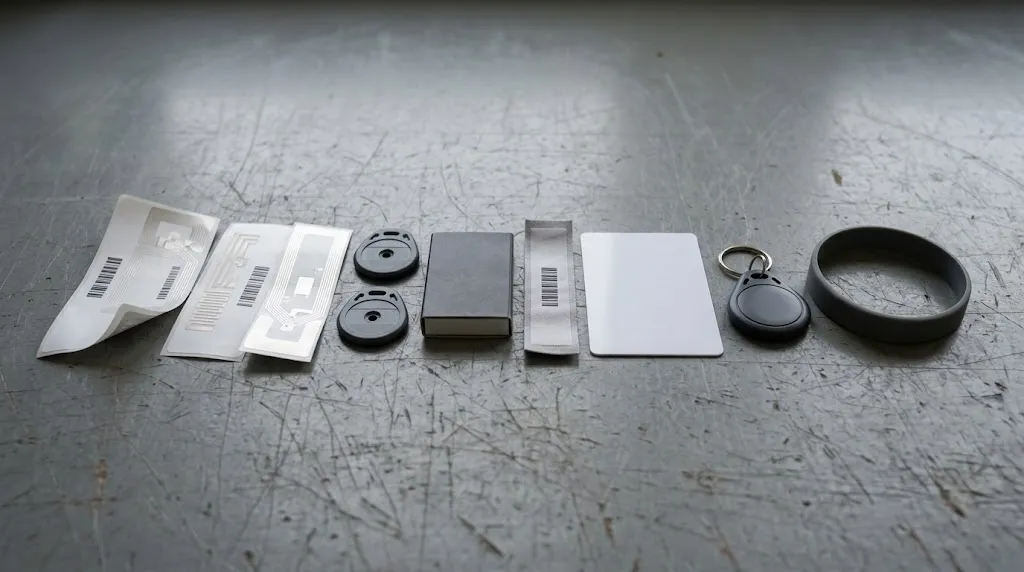
Overview
RFID transponders, or tags, give an object a digital identity that a reader captures without contact. Every tag on this page is passive: it has no battery and draws its energy from the reader.
Which tag fits depends on what is tagged, how far away it is read, how long it stays on the object and what data it holds. It also depends on where the tag sits: indoors or outdoors, on metal, near liquid, or exposed to heat, chemicals or washing.
The frequency band sets the read distance. Low-frequency (LF) tags are read at a few centimetres. High-frequency (HF) tags are read from a few centimetres up to about 1 m; NFC tags are a kind of HF tag, and almost every smartphone reads them. Ultra-high-frequency (UHF) tags are read at several metres, many of them at once.
Many tags store only a unique number that points to a record in a database. Some chips also hold additional data, such as a production date or a maintenance record, and some protect their data against copying and alteration with encryption and authentication.
Identech AG selects the tag for the application, supplies it, and encodes and tests it.
Types
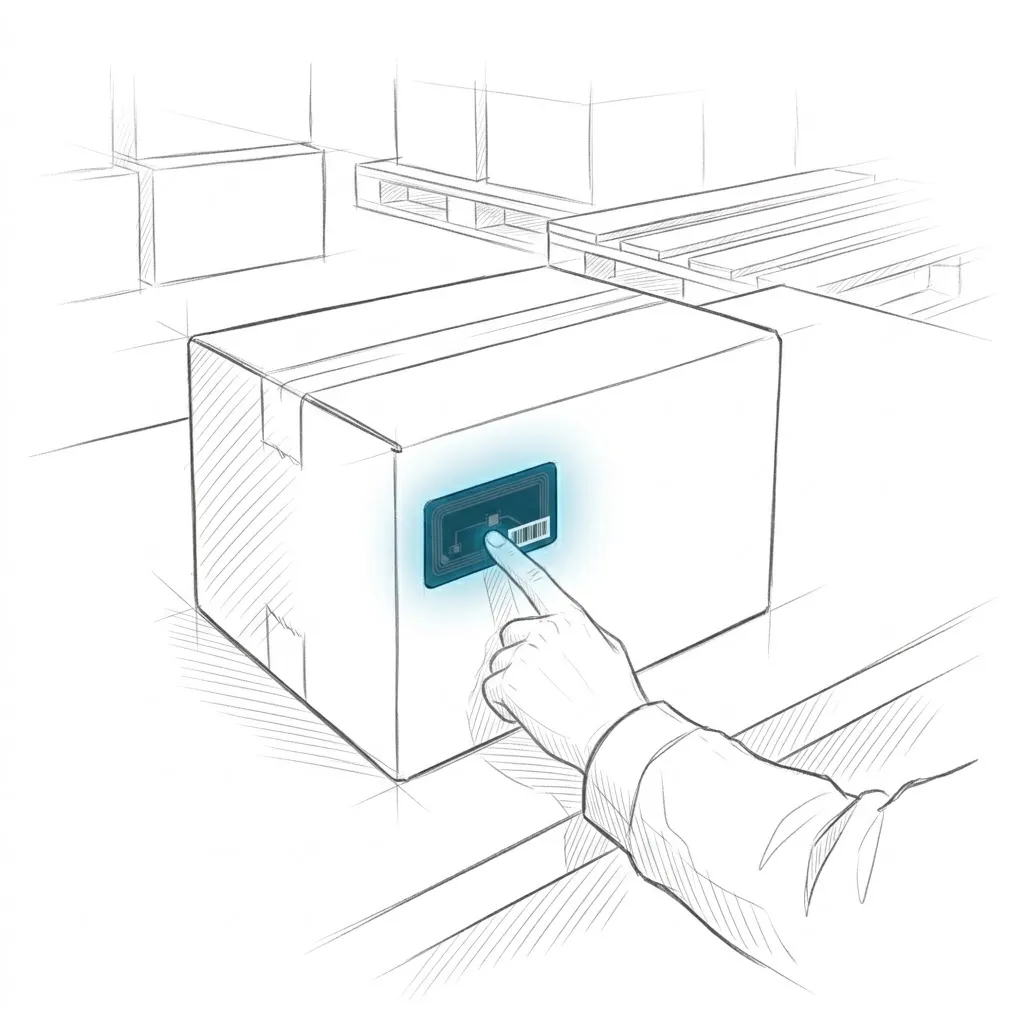
Labels
A thin inlay of chip and antenna on a paper or plastic carrier, stuck onto cartons, packaging or documents. A label can be printed like a barcode label.
Applications
- Shipping and goods-in of cartons and pallets
- Item-level tagging of retail goods
- Stocktaking in a warehouse
- Library books, documents and file folders

Hard tags
A tag encased in a durable rigid shell of industrial plastic, ceramic or metal, which is screwed, riveted, glued or tied onto equipment, containers or tools. The shell protects the chip against heat, cold, water, chemicals, washing, sterilisation and impact, for tags that stay on an object for many years.
Applications
- Returnable containers and pallets in a loop
- Tools and fixtures in production
- Machines and equipment outdoors
- Instruments that go through sterilisation

On-metal tags
A tag built to be read when mounted directly on metal or on a container holding liquid. It comes as a flat label or encased in a rigid shell, and is glued, screwed or riveted onto the object.
Applications
- Machines and control cabinets
- Metal tools and gauges
- Drinks and liquid containers

Textile tags
A soft, pliable tag sewn into a seam or hem, or heat-sealed onto the fabric. It stays in the garment or linen item through repeated industrial washing, drying and ironing.
Applications
- Industrial laundries
- Workwear and uniforms
- Hospital and hotel linen
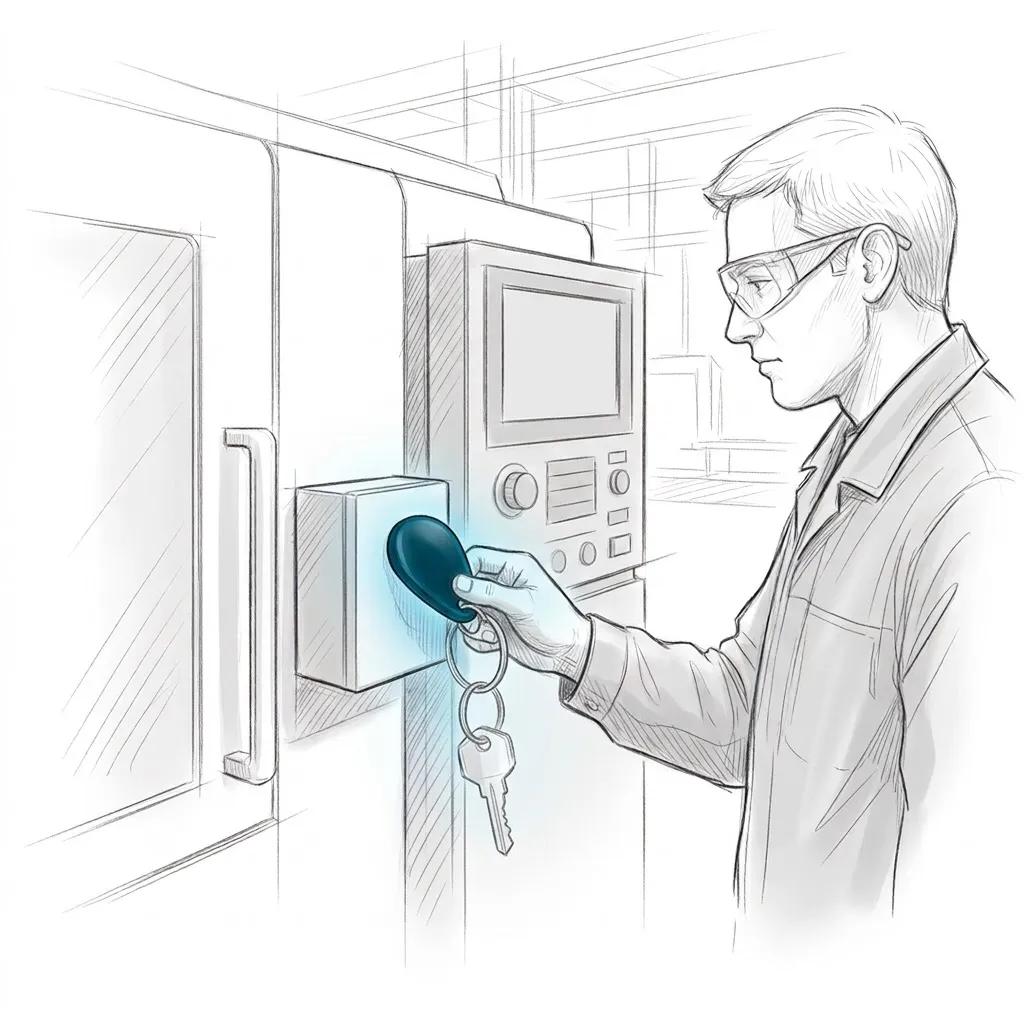
Cards, key fobs and wristbands
Tags carried or worn by a person: a credit-card-sized card, a fob on a key ring, or a wristband closed around the wrist.
Applications
- Time recording
- Login at a machine or terminal
- Entry at events
Where this product helps
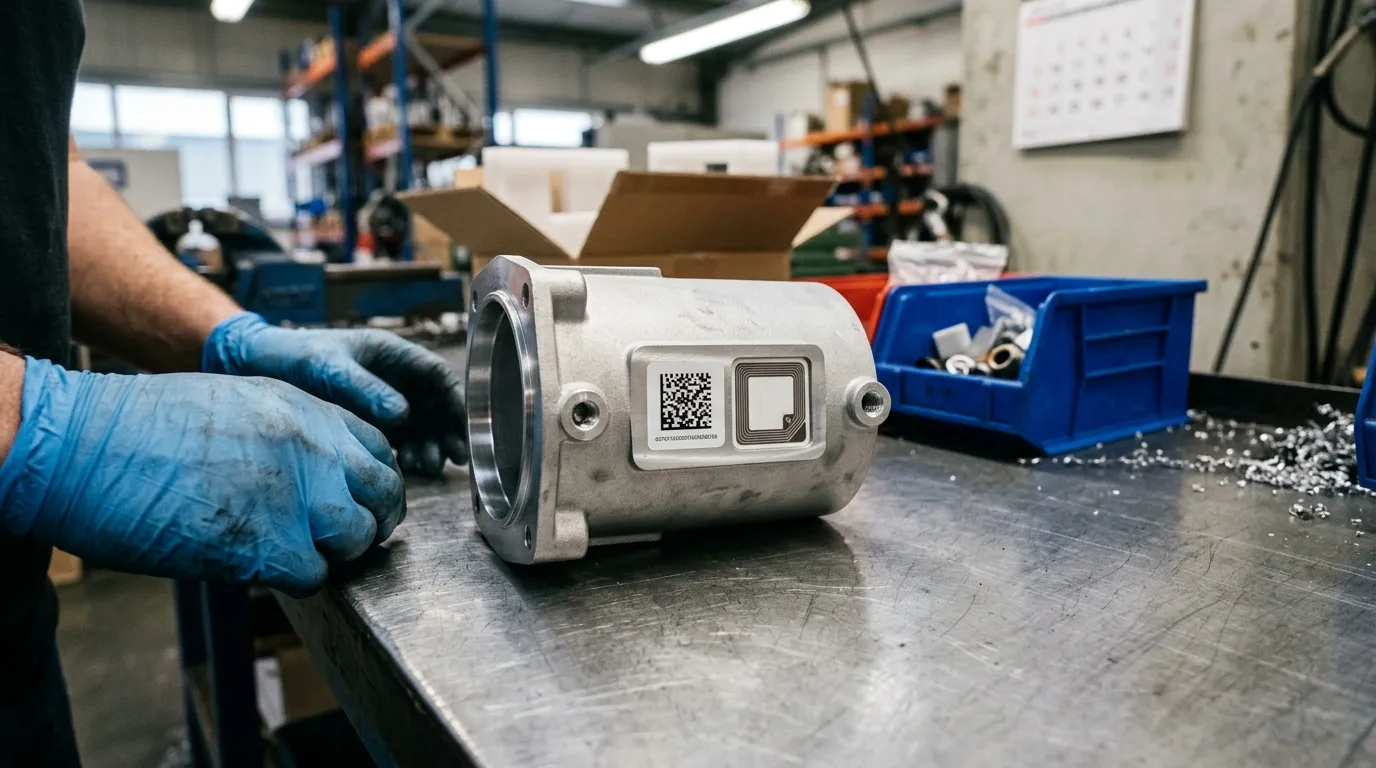 Automotive and rail suppliers
When your customer asks for RFID on the part
Your customer now expects an RFID transponder on the parts you ship, next to the GS1 label. Your systems were never set up to program one.
Learn more →
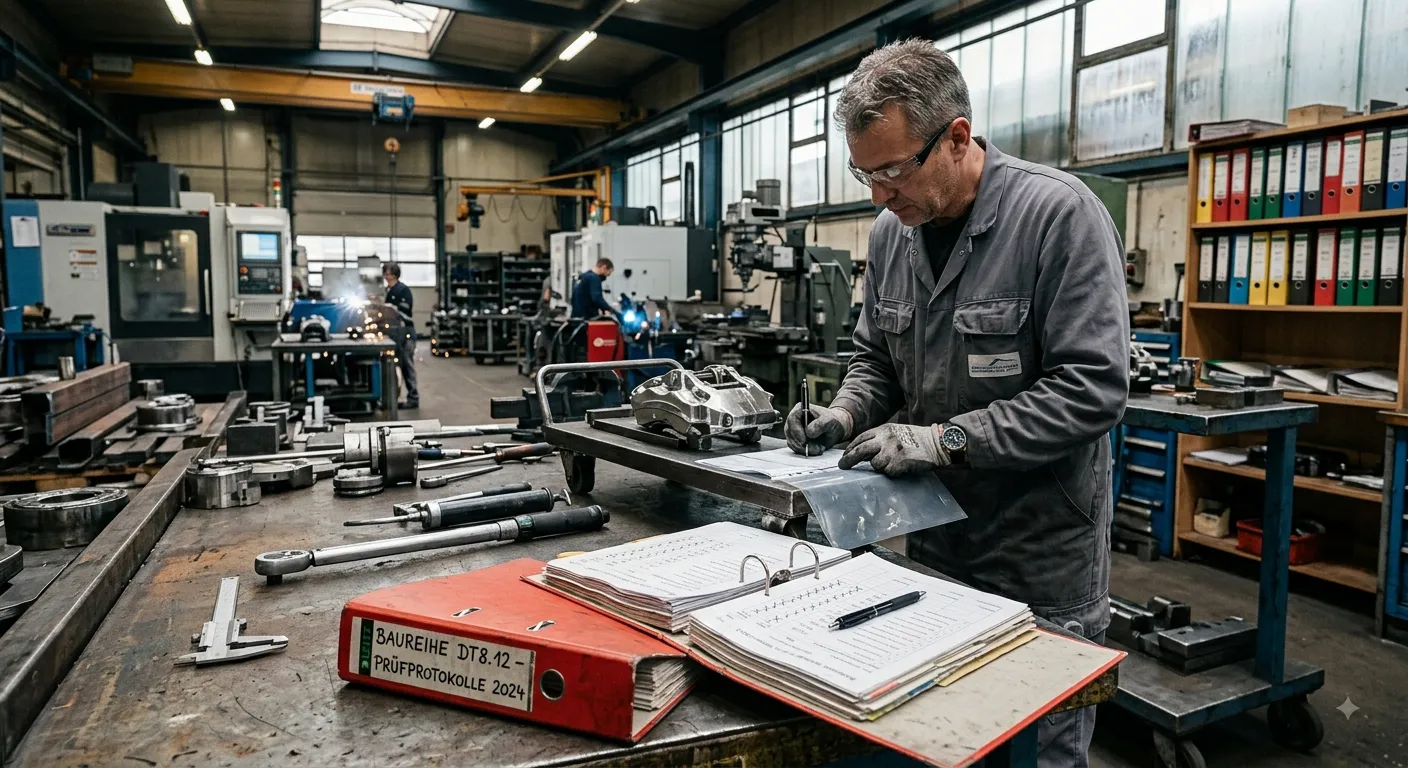 Paperless manufacturing
From route card to digital process
Your route card is right only on the day it was printed, and traceability ends at a tick in a binder. You spot mistakes at final test, or at your customer's.
Learn more →
Tell us about your use case
Together, we work out whether and how your process can be digitized.