
Automotive and rail suppliers
When your customer asks for RFID on the part
Your customer now expects an RFID transponder on the parts you ship, next to the GS1 label. Your systems were never set up to program one.
 Traceability
 Efficiency
 Error prevention
Starting point
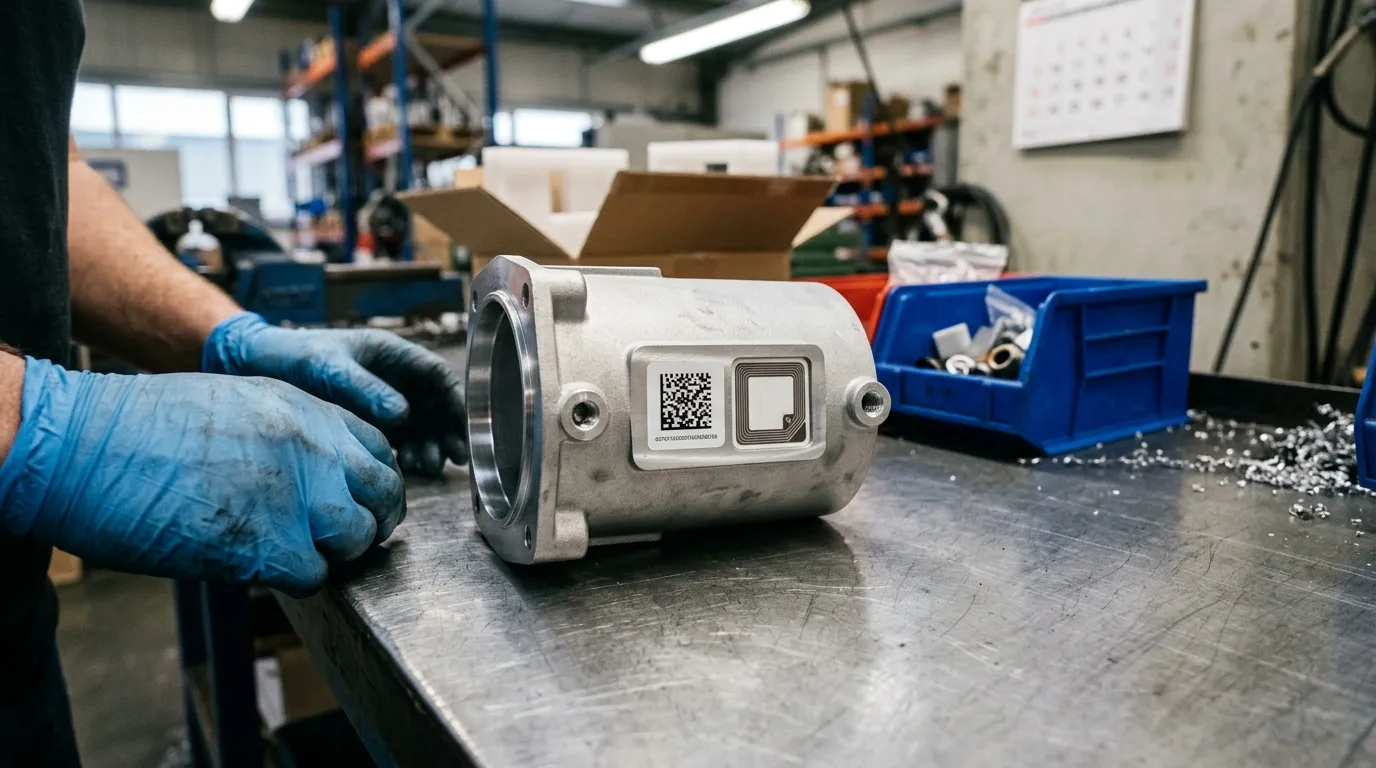
You supply safety-relevant components to customers such as vehicle and rolling-stock builders: brackets, housings, actuator bodies, cable assemblies. Every part is serialised. At the last station before packing it gets a printed label with your part number, your lot and a running serial, to GS1 standard.
Now your customer expects those components to carry an RFID transponder as well.
What goes wrong today
Programming transponders means reaching into your existing systems
The infrastructure is not there. Connecting RFID readers to systems you already run, such as the ERP, is a retrofit, and not a straightforward one.
Only some of your parts are to carry a transponder
There is no case for rolling out RFID programming across every line. The effort would land on parts that do not need it.
What changes
The transponder is programmed from the barcode already on the label
Everything the transponder needs is in the GS1 barcode the part already carries. That is the starting point, so there is no integration project to run first.
The operator adds one step, only where a transponder is fitted
On a part that carries a transponder, the operator scans the GS1 barcode, then reads the transponder, and that read programs it. Nothing is typed in.
The transponder is locked once it matches the label
Locking the transponder prevents changes to it, accidental or deliberate. The lock is also a check: it is applied only when the data on the transponder matches the data in the barcode.
What you gain
Parts can be read where the label cannot be seen
A transponder makes a component easier to read, including once it is installed and the part itself is out of sight.
The part stays identifiable when the label is damaged
A barcode label soon becomes unreadable once it is scratched, scuffed or torn. A transponder can be mounted where that kind of damage is considerably less likely, so the part carries a second marking.
Products used
 Software
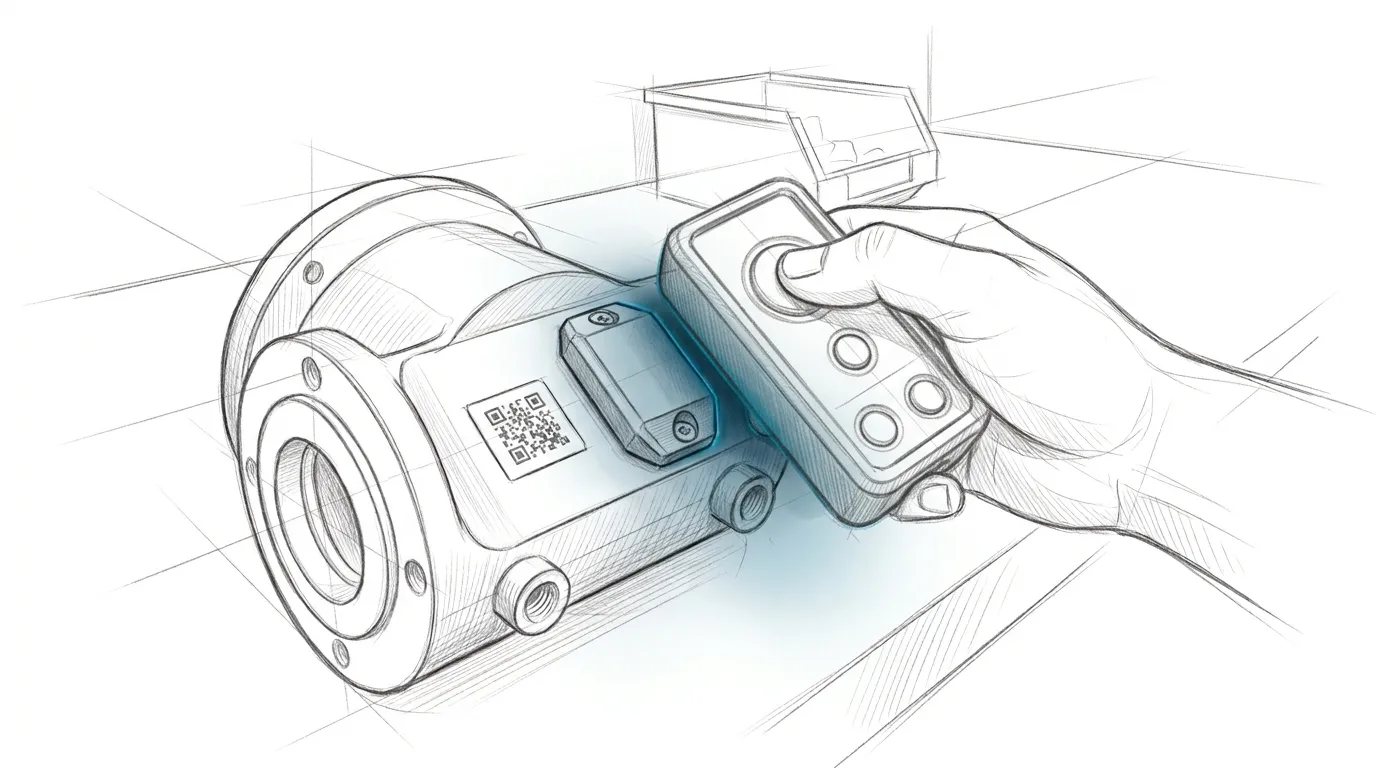
AIMSOC® Encode
Firmware for the ECCO+ that writes GS1-standard identities to RFID transponders
Learn more →
 Hardware
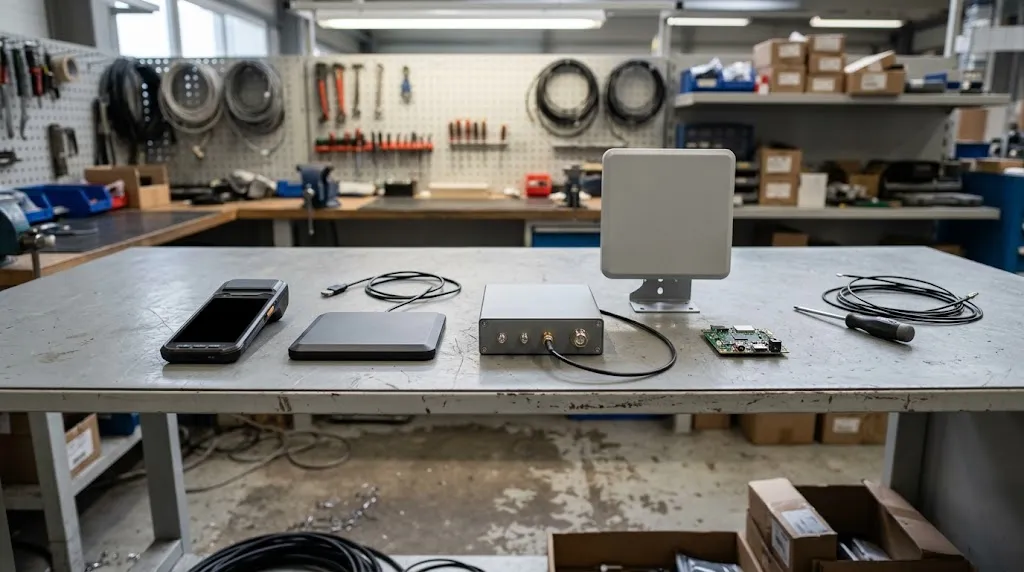
RFID readers and antennas
Handheld, desktop and fixed RFID readers, reader modules and antennas
Learn more →
 Hardware
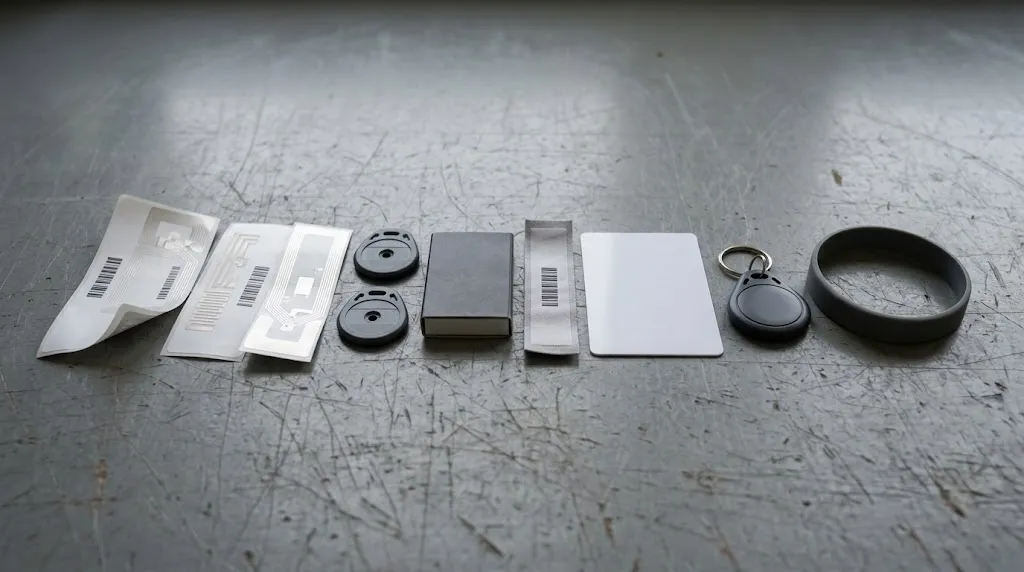
RFID transponders
Passive RFID tags for goods, equipment, metal, textiles and people
Learn more →
Tell us about your use case
Together, we work out whether and how your process can be digitized.